In Dec. 2008, two residents of Ashland, Oregon, John Javna and Paul Giancarlo, began working on a door-to-door food collection program to support their local food bank. They searched the internet for advice about how to organize the project, but found nothing…so they invented their own model and called it the Ashland Food Project (AFP). On June 13th, 2009, 26 volunteers—the first “Neighborhood Coordinators” —delivered the AFP’s first batch of food. In August, the AFP added their iconic Green Bag to the program . By the end of the year they’d collected 20 tons of food, and the Food Project was an established part of the community.

Word spread. With the AFP’s help, volunteers in nearby Oregon towns started Food Projects in their own communities. Then people began telling friends and family in other areas about the program and the network began to grow. A couple from Olympia, Washington started the first out-of-state Food Project in 2010. In 2011, a Californian learned about the AFP and started his own spinoff “green bag” program called A Simple Gesture. Calls came in from Florida, Arizona, Massachusetts and more. The AFP’s founders decided to create a nonprofit dedicated to supporting these new efforts…and the Neighborhood Food Project (NFP) was born.
People continued to discover the Food Project model on their own. NFP volunteers were always available to help them get started, But it wasn’t their priority. Rather than pushing rapid expansion, the NFP focused on creating a system that could actually be sustained—developing software, training materials and infrastructure to support existing Food Projects. It worked: By Dec. 2013, the 5 original Food Projects in Jackson County, Oregon, had collected a million pounds of food. By 2016, the NFP had become the largest all-volunteer organization in Oregon…and the NFP network, despite no formal outreach, had grown to 37 Food Projects in 9 states
The NFP’s 10th anniversary marked a turning point. With a proven model, a growing network of Food Projects across the country, and new tools in development, the organization began laying the groundwork for a more intentional national expansion. The goal: bring this system to as many communities as possible. The NFP created a “Beginner’s Handbook” and a “Starter Kit” for new Projects. They developed a program for high school students called the Student Hunger Strike Force and a sponsorship template to encourage businesses to support local Food Projects, and a mentorship program bringing experienced Food Project organizers to offer advice to newbies.
When COVID-19 arrived, it tested the Food Project model in ways no one anticipated. The experiences at the heart of the work—meeting neighbors on doorsteps, sorting food side by side, gathering as a community on Collection Day—suddenly carried risk. New inquiries slowed, and the NFP found itself at a standstill. Promising programs that had taken years to build — including the Student Hunger Strike Force — went dormant, and the weight of the organization fell on just one or two people, a small handful working quietly to keep the mission alive. But the local Food Projects themselves never stopped. Most adapted, protected their volunteers, and kept collecting and delivering food. In a time of isolation, they proved to be exactly what their communities needed.
In 2025, the NFP came back to life with new energy and structure. A full-time Executive Director joined and began working closely with local Food Projects. Together, they completed the Neighborhood Organizing System, a custom software program designed to simplify all Food Project operations; they rebuilt the organization’s online presence; and they’ve developed a new suite of materials to help new Food Projects launch and grow. Today, more than 25,000 people across 12 states are active members of Neighborhood Food Projects, each one locally run and deeply rooted in its community. As food insecurity continues to rise across America, the NFP is committed to bringing the Food Project model to more communities than ever before. The work continues.
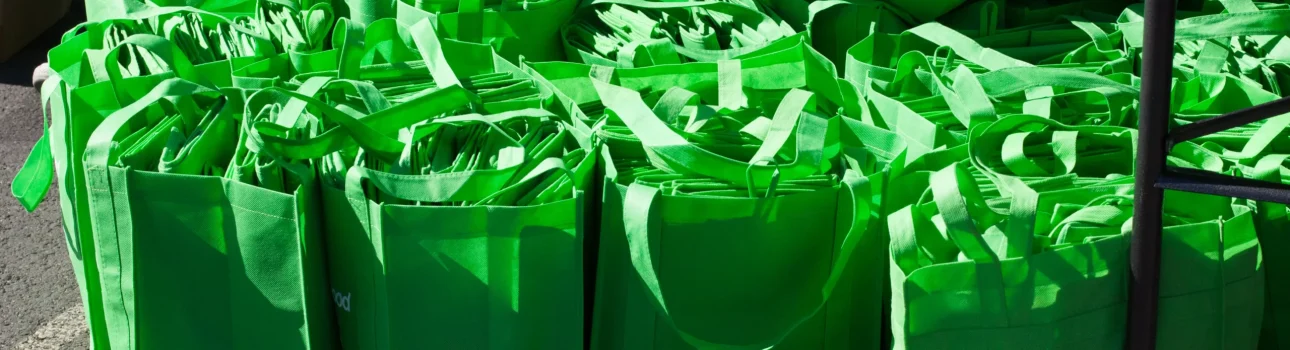
The Neighborhood Food Project works because it’s built around the way people actually live. Nobody has to rearrange their life to participate. Food Donors shop the way they always have and simply pick up one or two extra items. Neighborhood Coordinators manage a route that fits in a Saturday morning. The system is designed for real people with real schedules, and that’s why they stick with it.
Most efforts to address hunger rely on occasional surges, such as a holiday drive or a one-time campaign. The Neighborhood Food Project relies on something quieter and more powerful: habit. When giving becomes routine, pantries can plan around it. When volunteering feels manageable, people keep showing up. Consistency is the thing that makes the difference, and consistency is what this model is built on.
The Food Project has never tried to replace the organizations already doing this work. Food banks, pantries, and social services are essential since they’re the last line of defense for families in crisis. The Food Project model creates a steady, reliable stream of food and a network of neighbors who are actively invested in each other’s wellbeing. It’s about supporting existing organizations, never replacing them.